
Retell prices on peak concurrency, not total call volume. Twenty concurrent calls are free. After that, it's $8 per slot per month.
Retell prices on peak concurrency, not total call volume. Twenty concurrent calls are free. After that, it's $8 per slot per month.
TL;DR
- Every Retell account includes 20 concurrent calls free. Extra concurrent calls cost $8 per slot per month.
- Concurrent call pricing scales with your busiest hour, not your total monthly call volume.
- This matters most to service businesses with predictable peak windows, like brokers and real estate offices.
Retell prices on concurrent calls, not minutes or volume. Twenty concurrent calls are included on every account. Beyond that, each additional slot costs $8 per month.
What Does Concurrent Calls Actually Mean?
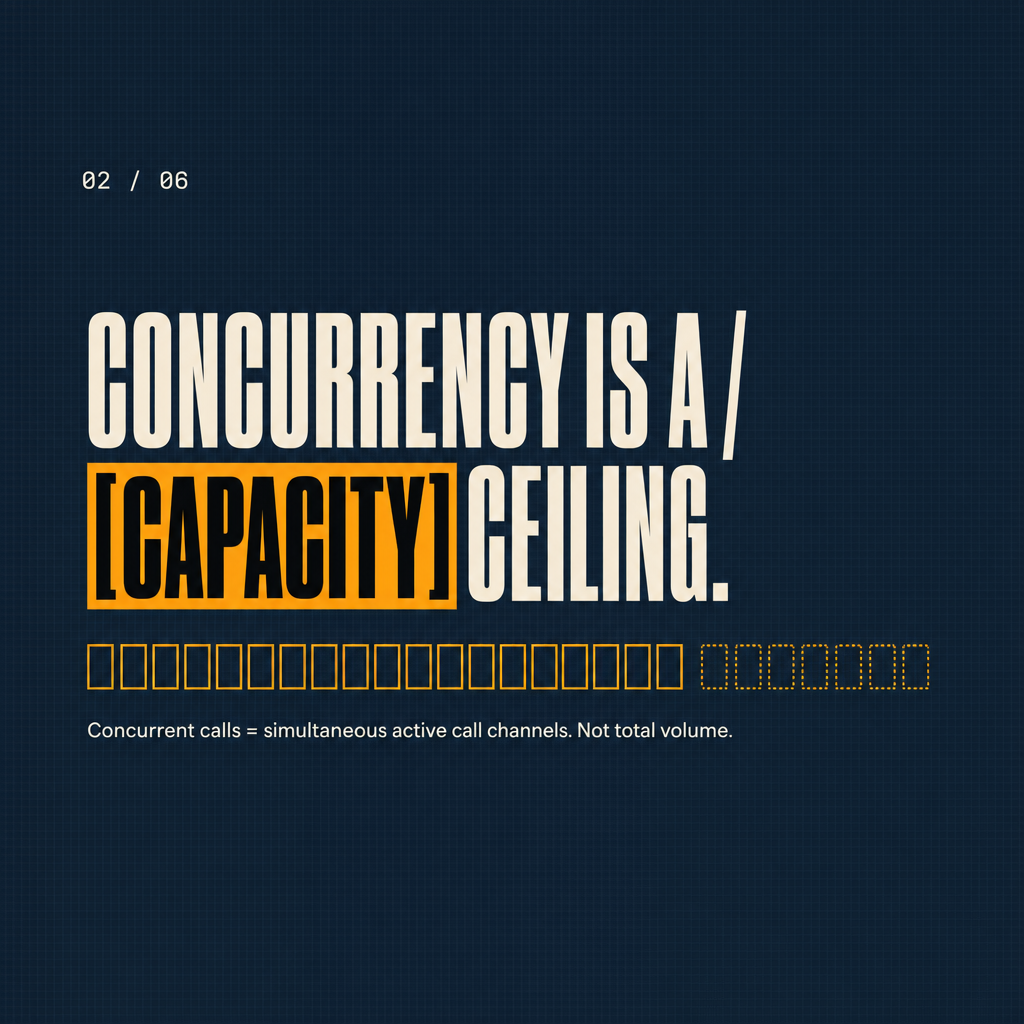
Concurrent calls is the number of calls your agent can handle at exactly the same time, right now.
It's not the number of calls per day. It's not your monthly volume. It's a snapshot of your peak load. If your finance brokerage runs a follow-up campaign and five leads call back inside the same thirty-second window, that's five concurrent calls. The nineteenth is fine. The twenty-first gets queued or dropped, depending on your setup.
This is the number that matters. Not how many calls you take across the month. How many you take at once.
What Does the Free Tier Actually Cover?
Twenty concurrent calls is a genuinely useful free tier for most small service businesses.
Think about what twenty simultaneous active calls looks like in practice. For most finance brokers, insurance advisers, or real estate offices with a team of under twenty staff, hitting that ceiling in normal operations is unlikely. The free tier covers a realistic peak for a business that's using voice AI for inbound follow-up, not running a national outbound campaign.
Where it gets tight is when you're doing bulk outbound. Dialling a list of several hundred leads in a short window will compress your concurrency fast. That's when the $8 slots start mattering.

How Does $8 Per Slot Per Month Stack Up?
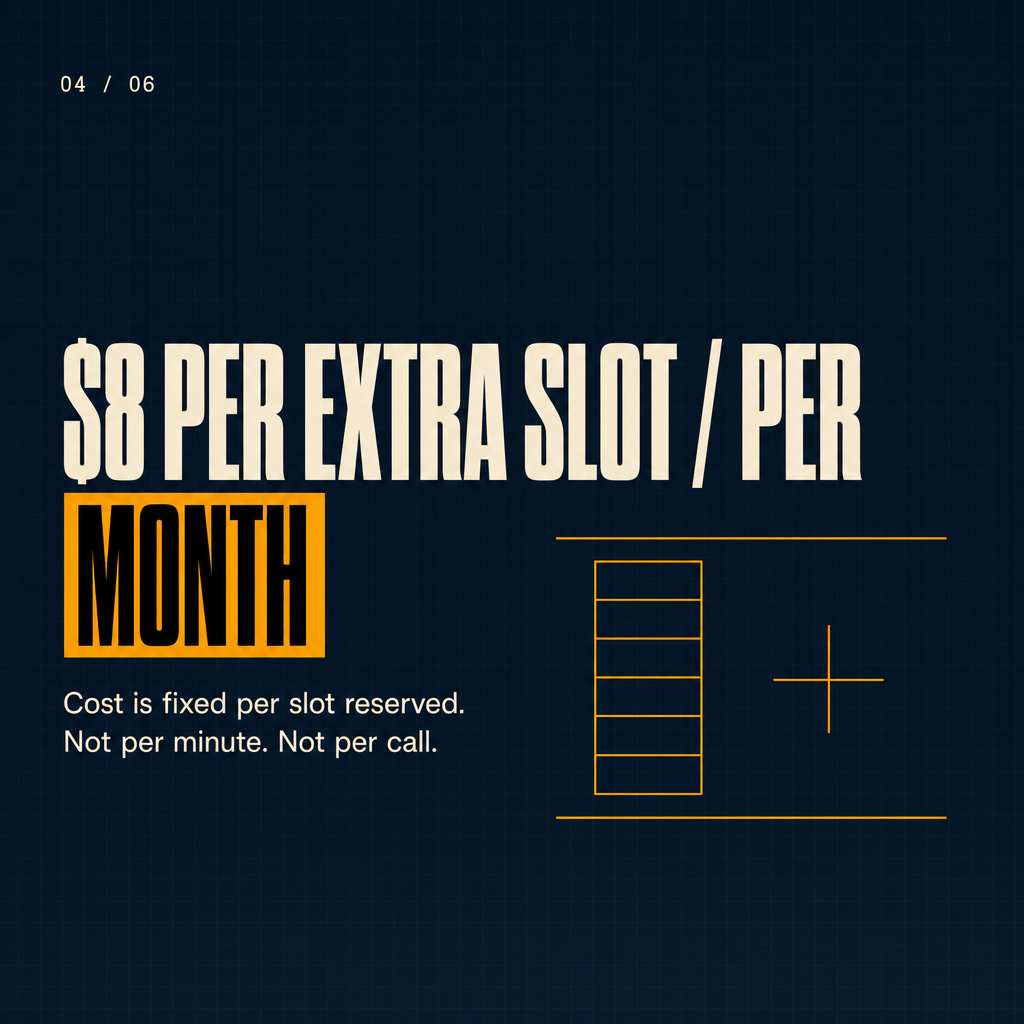
The $8 per concurrent call per month cost is predictable infrastructure, not usage-based surprise billing.
This is the part that catches people off guard in a good way. You're not paying per minute on this line item. You're paying for capacity. If you add ten extra concurrent call slots and barely use them one month, you still pay for ten. But if you hammer them every day, you still only pay for ten. It behaves more like a reserved instance than a metered API.
That's a different mental model from most telephony pricing. And it's worth mapping before you build. Check the full voice agent cost breakdown to see where concurrency sits relative to your model and TTS spend.
What Are the Real Trade-offs to Consider?
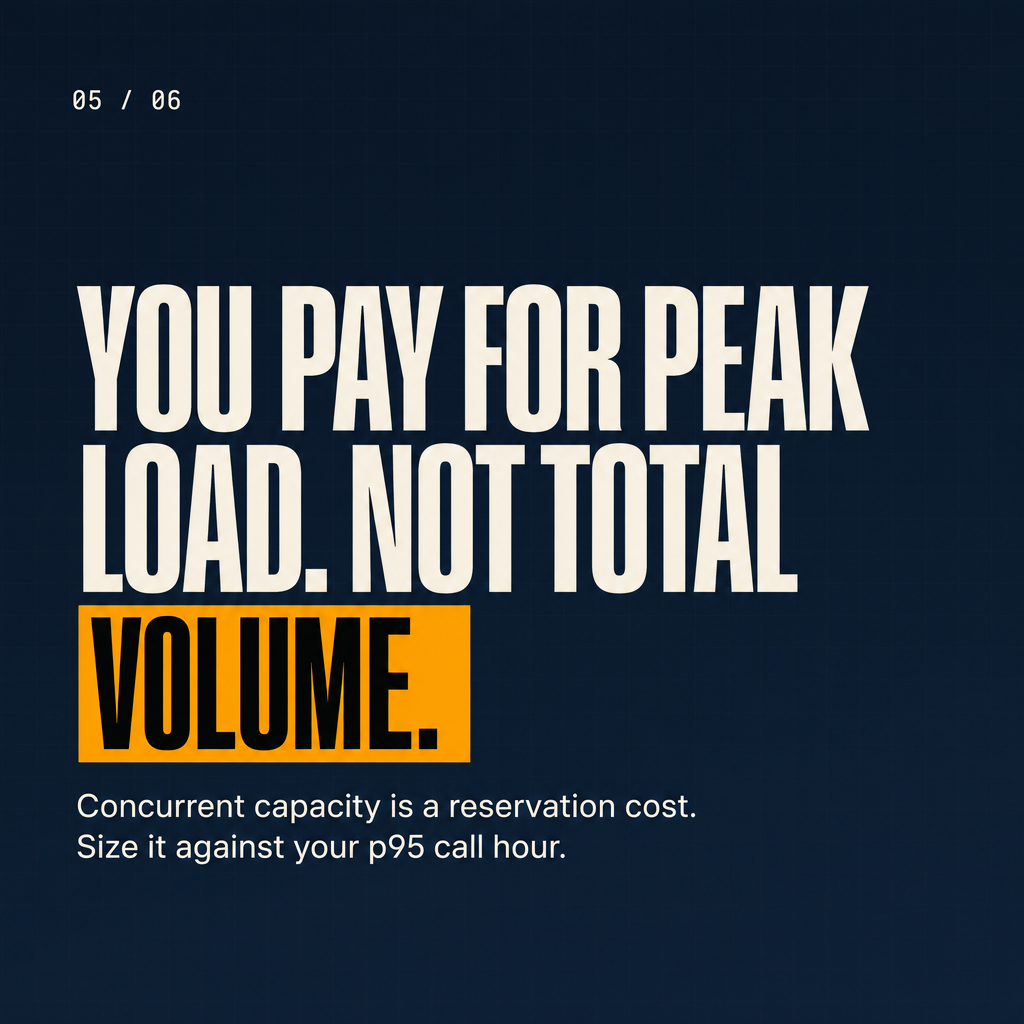
The trade-off is buying for your peak, not your average.
Concurrency-based pricing means you need to think about your busiest hour, not your busiest month. That's a shift. A business with steady inbound across the day is in a very different position from one that sends a bulk SMS campaign at 9am and gets a wave of callbacks in the next forty minutes.
Here's what to map before you commit to a concurrency tier:
- What's your realistic peak simultaneous call window?
- Are you running inbound only, outbound only, or both at once?
- Do your campaign cadences compress callbacks into short windows?
- Is your outbound dialler pacing calls, or firing them simultaneously?
- What happens to overflow? Queued, voicemail, or lost?
Getting this wrong means either overpaying for headroom you don't use, or dropping calls at the worst moment. Neither is a good look. For businesses where missed calls are a compliance risk, like those operating under ACMA telecommunications rules, overflow handling isn't optional.
How Does This Fit Into a Production Build?
Concurrency is an infrastructure decision, and it needs to be modelled before you go live, not after you hit the ceiling.
In a production voice AI stack on Retell and N8N, the concurrency limit affects how you design your retry logic and your call queuing. If you're replaying failed call events, you need to know your available slots before you fire the retry. A dead letter queue that replays into a saturated concurrency pool just fails again. Read how failed call events get replayed safely if you haven't set that up yet.
The $8 per slot model gives you a clean cost input for your capacity planning. Pick your peak target, multiply by $8, add it to your monthly build cost, and you know what you're running on.
Key Takeaways
- Every Retell account includes 20 concurrent calls free. That covers most small service business peaks without spending a cent on capacity.
- Extra concurrent calls cost $8 per slot per month. It's capacity pricing, not usage pricing.
- Model your peak window before you go live. The free tier is generous, but compressed outbound campaigns can hit the ceiling fast.
- Overflow handling matters. Dropped calls at peak are a lead loss and potentially a compliance issue depending on your industry.
If you want a quick read on how concurrency fits into total voice AI running costs, the voice agent cost breakdown covers the full picture.
Running a finance, insurance, real estate, or accounting business and want to know if your call volume fits inside the free tier? DM me AUDIT and I'll ask you five questions. You'll have a clear answer in under ten minutes.
Frequently Asked Questions
Written by Syed Bilgrami
Founder of TheAutomate.io, building AI voice agents for Australian businesses